Buying your first home in San Bruno can feel exciting and intense at the same time. You may be trying to balance your budget, learn the process, and move quickly in a market where good homes do not sit for long. The good news is that when you know what to expect, you can make clearer decisions and avoid a lot of stress. Let’s walk through what first-time buyers should know before stepping into the San Bruno market.
San Bruno market conditions
San Bruno remains a competitive market in spring 2026. Across major housing platforms, the numbers vary a bit, but the overall picture is consistent: inventory is limited, buyer demand is strong, and well-priced homes often move quickly.
Zillow reports an average home value of $1,317,334, with homes going pending in about 14 days as of May 31, 2026. Redfin describes San Bruno as very competitive, with homes receiving about three offers on average and a median sale price of $1.3 million over the last three months. Realtor.com also characterizes the city as a seller’s market in May 2026, with homes selling for about asking price on average.
For you as a first-time buyer, that usually means two things. First, you need to be ready before you start shopping. Second, you should expect that some homes may attract multiple offers, especially those that show well and are priced carefully.
What first-time buyers can expect on price
San Bruno includes a meaningful range of price points depending on the area and housing type. Zillow neighborhood values show Old Town at about $1.10 million, Westborough and Orange Park near $1.18 million, Sunshine Gardens around $1.21 million, Sign Hill about $1.28 million, Avalon about $1.30 million, Buri Buri about $1.34 million, and Serra Highlands around $1.37 million.
That range can help you set realistic expectations early. If your budget is tight for a detached home in one part of the city, a condo, townhome, or a different neighborhood may offer a more workable path into homeownership.
It is also worth remembering that list price is not always the final price. Redfin reports that the average home sells about 6% above list price, while especially competitive homes can sell about 14% above list price. In a market like this, your target price should leave room for competition if needed.
San Bruno housing stock and home styles
San Bruno’s housing stock is shaped by older residential development. According to the city’s housing element, 60% of the 2020 housing inventory was single-family, 35% was medium-to-large multifamily, and more than three quarters of the housing inventory was built between 1940 and 1980.
For first-time buyers, that has practical implications. Many homes offer character and established neighborhood patterns, but older homes can also come with lower energy efficiency, accessibility challenges, or deferred maintenance if updates have been postponed over time.
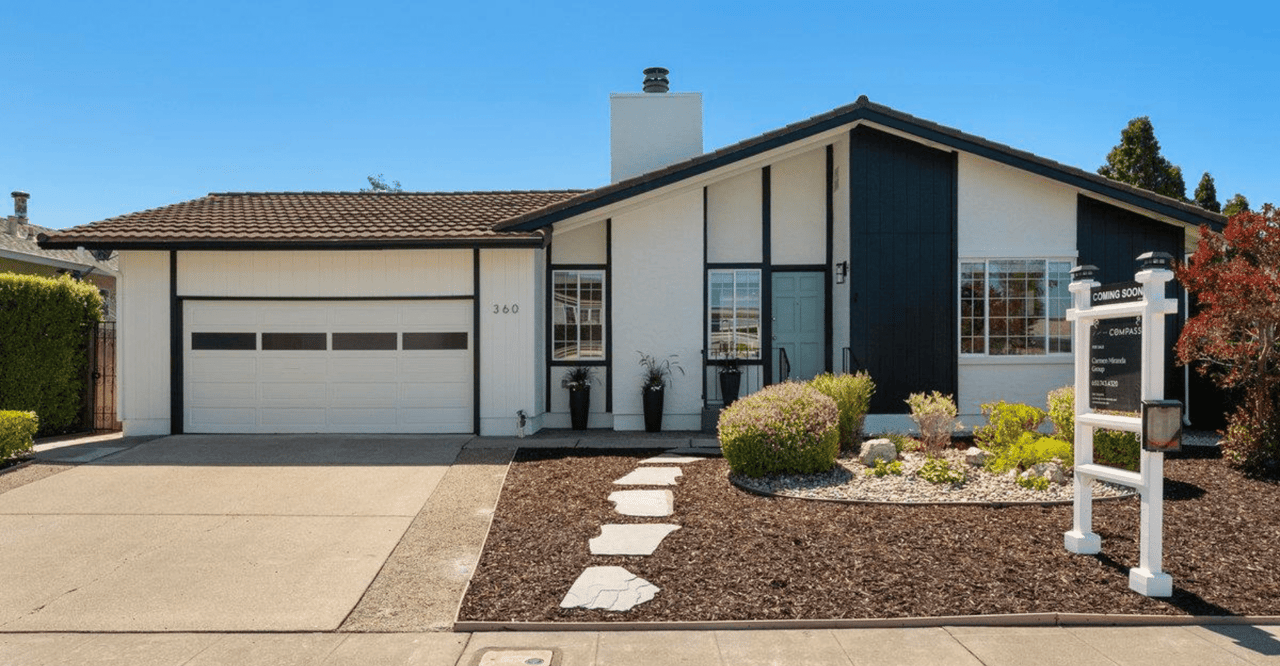
The city’s residential design guidelines point to a local mix that includes early smaller-lot development, pre-World War II traditional and modernist homes, and postwar ranch homes in later subdivisions. In real terms, you should expect to see many older detached houses in established areas, along with more compact condo and townhome options near transit-oriented parts of the city.
Start with your budget and preapproval
Before you tour homes, it helps to know your numbers. The California Department of Real Estate says buyers should generally budget for a down payment of about 5% to 20%, plus another 3% to 7% for closing costs.
If down payment funds are your main obstacle, it is worth exploring assistance programs. The same DRE guidance notes that government programs may help in some cases, and CalHFA says some of its programs require first-time buyers who are pre-qualified to complete a homebuyer education course.
Preapproval is especially important in San Bruno. DRE and the Consumer Financial Protection Bureau both note that sellers often expect a preapproval letter, and preapproval helps you shop with a clearer sense of your price range. It also does not lock you into one lender, so you can still compare official Loan Estimates after you have an accepted offer.
Touring homes with a practical eye
It is easy to focus on finishes and staging when you first walk into a home. For a first-time buyer, though, the better approach is to look at both fit and condition.
DRE recommends evaluating the location, bedroom count, lot size, and proximity to work, stores, hospitals, services, and other everyday needs. It also advises buyers to check the electrical, plumbing, and structural condition of the property.
Because so much of San Bruno’s housing stock was built decades ago, this part matters. An older home may have charm and a great layout, but you also want to understand the likely cost of repairs, upgrades, and future maintenance before you write an offer.
Writing an offer in a competitive market
In San Bruno, strong homes may move fast. Zillow says homes go pending in about 14 days, and Redfin reports about 15 days for the average timeline in its data set. That means you may not have unlimited time to think once the right property appears.
DRE advises that offer price should be based on recent comparable sales in the neighborhood, not just the asking price. In a seller’s market, that guidance is especially helpful because list prices may be used strategically to attract attention rather than reflect the likely final sale amount.
California buyers should also expect to see common contingencies or special conditions tied to financing, inspections, repairs, pest issues, or home warranty coverage. DRE also recommends reviewing the offer carefully and making sure there are no blank spaces before signing.
Some buyers in competitive situations choose to waive certain contingencies, and Redfin says that happens in parts of the San Bruno market. Still, that is a serious decision and not one to make casually. A thoughtful strategy is to decide in advance which protections matter most to you and which terms you may be willing to adjust if needed.
Inspections and negotiation
If your contract includes an inspection contingency, you have important protections. The Consumer Financial Protection Bureau says that if the purchase contract is contingent on a satisfactory inspection, you can cancel without penalty if the inspection results are unsatisfactory.
That does not always mean the deal ends. In many cases, repairs can be negotiated, or the seller may offer credits to help offset the issue.
This step can be especially important in San Bruno because of the city’s older housing stock. Even when a home looks well cared for, inspections can reveal aging systems, deferred maintenance, or improvements you may want to budget for soon after closing.
Understanding escrow and closing in California
In California, escrow is the normal structure for a home sale. The California Department of Financial Protection and Innovation describes escrow as a neutral third party, and DRE says the escrow officer helps make sure contract terms are completed and the deed is recorded at the close.
As closing approaches, your lender must provide the Closing Disclosure at least three business days before closing. That gives you time to review your final loan terms and closing costs before signing.
You should also plan for a final walk-through before closing. This is your chance to confirm the home is in the expected condition and that any agreed-upon items have been handled.
On closing day, DRE says buyers usually meet with their agent and an escrow or title representative. After title is issued and escrow closes, the deed is typically recorded at the county recorder’s office within one to three days.
What happens after closing
Once the transaction is complete, keep your records organized. The Consumer Financial Protection Bureau recommends saving your Closing Disclosure, promissory note, deed of trust or mortgage, and deed in a safe place.
That paperwork matters for your own records, future refinancing, tax preparation, and long-term planning. It is also helpful to know that deed and mortgage information become part of the public record after closing, so maintaining your own clean file is a smart habit from day one.
Checking first-time buyer assistance carefully
If you are searching for help with affordability, take time to verify which programs are active right now. San Bruno’s homeowner resources page still references HEART and Housing Trust Silicon Valley, but the current program details have changed.
HEART says its First Time Homebuyer Program was restructured to information only as of January 28, 2026, and the loan is no longer offered. Housing Trust Silicon Valley’s current HELP page says it serves Santa Clara County and the cities of Menlo Park and East Palo Alto rather than San Bruno.
For that reason, the safest county-level place to start is San Mateo County’s current first-time homebuyer page. Program rules, eligibility limits, and funding availability can change, so it is important to confirm details before building your plan around them.
How to prepare before you start
If you want to buy your first home in San Bruno, a little preparation can give you a major advantage. Try to have these pieces in place before you begin touring seriously:
- A clear monthly payment comfort range
- Estimated cash available for down payment and closing costs
- A current preapproval letter
- A short list of must-haves versus nice-to-haves
- A basic understanding of how much updating you are willing to take on
- A plan for how quickly you can review and respond when a strong home hits the market
In a fast-moving market, preparation is not just helpful. It is part of being competitive.
A calmer way to buy in San Bruno
Your first home purchase does not need to feel like guesswork. In San Bruno, the market can move quickly, prices can vary a lot by area and property type, and older homes often require careful evaluation. But when you understand the process, know your budget, and work from real local data, you can move forward with more confidence.
If you are thinking about buying in San Bruno and want thoughtful, one-on-one guidance through the process, Carmen Miranda can help you evaluate options, understand the local market, and make informed decisions at every step.
FAQs
What is the San Bruno housing market like for first-time buyers?
- San Bruno is a competitive market with limited inventory, strong buyer demand, and many homes going pending in about two weeks, depending on the source and reporting period.
How much money should a first-time buyer budget for a San Bruno home purchase?
- The California Department of Real Estate says buyers should generally plan for a 5% to 20% down payment plus about 3% to 7% for closing costs.
What home types should first-time buyers expect in San Bruno?
- San Bruno has a mix of older single-family homes, postwar ranch homes, and multifamily options, with much of the housing stock built from 1940 to 1980.
Do first-time buyers need preapproval before shopping in San Bruno?
- Preapproval is strongly recommended because sellers often ask for a preapproval letter, and it helps you understand your price range before you start making offers.
Are home inspections important for older San Bruno homes?
- Yes. Since much of San Bruno’s housing stock is older, inspections can help identify electrical, plumbing, structural, or maintenance issues before you close.
What should buyers know about closing on a home in San Bruno?
- In California, buyers typically close through escrow, receive a Closing Disclosure at least three business days before closing, complete a final walk-through, and see the deed recorded shortly after escrow closes.