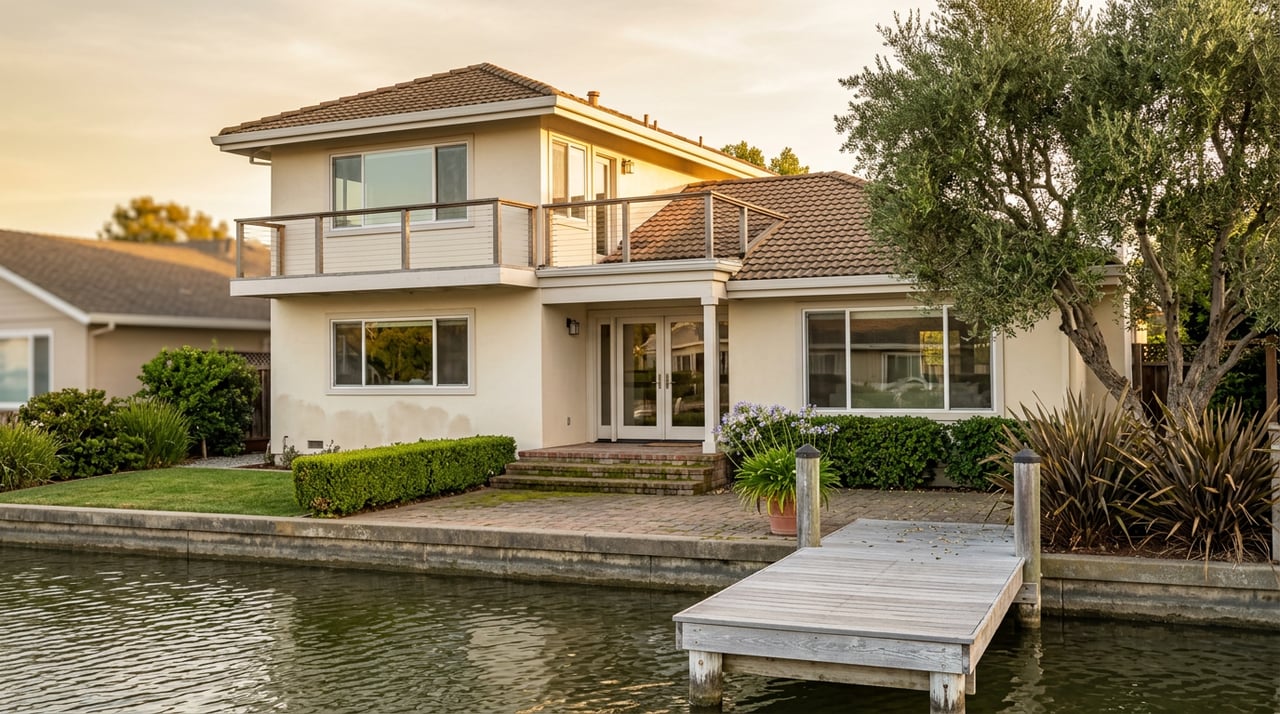
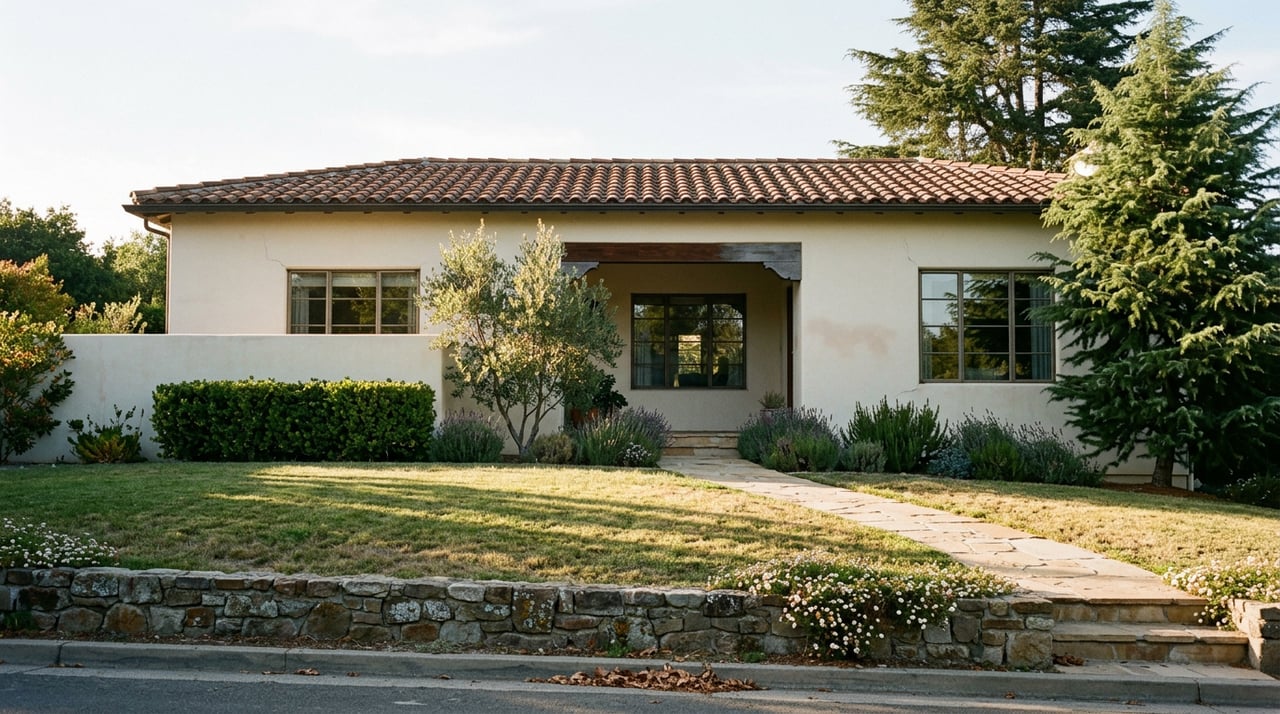
A homeowner on Clark Drive pulls a permit for a second-story addition and learns, halfway through the paperwork, that a preservation study once flagged the whole neighborhood as a strong candidate for historic-district status. That fact has been sitting in city files since 1989. For thirty-six years it meant almost nothing, because San Mateo had no actual mechanism for turning a preservation study into a real district outside of downtown.
That changed this year. The city did not decide San Mateo Park should become a historic district. It decided, for the first time, how that question could even be asked, and it put the answer in the hands of the owners themselves rather than the planning department.
A Neighborhood Built Around Its Curves
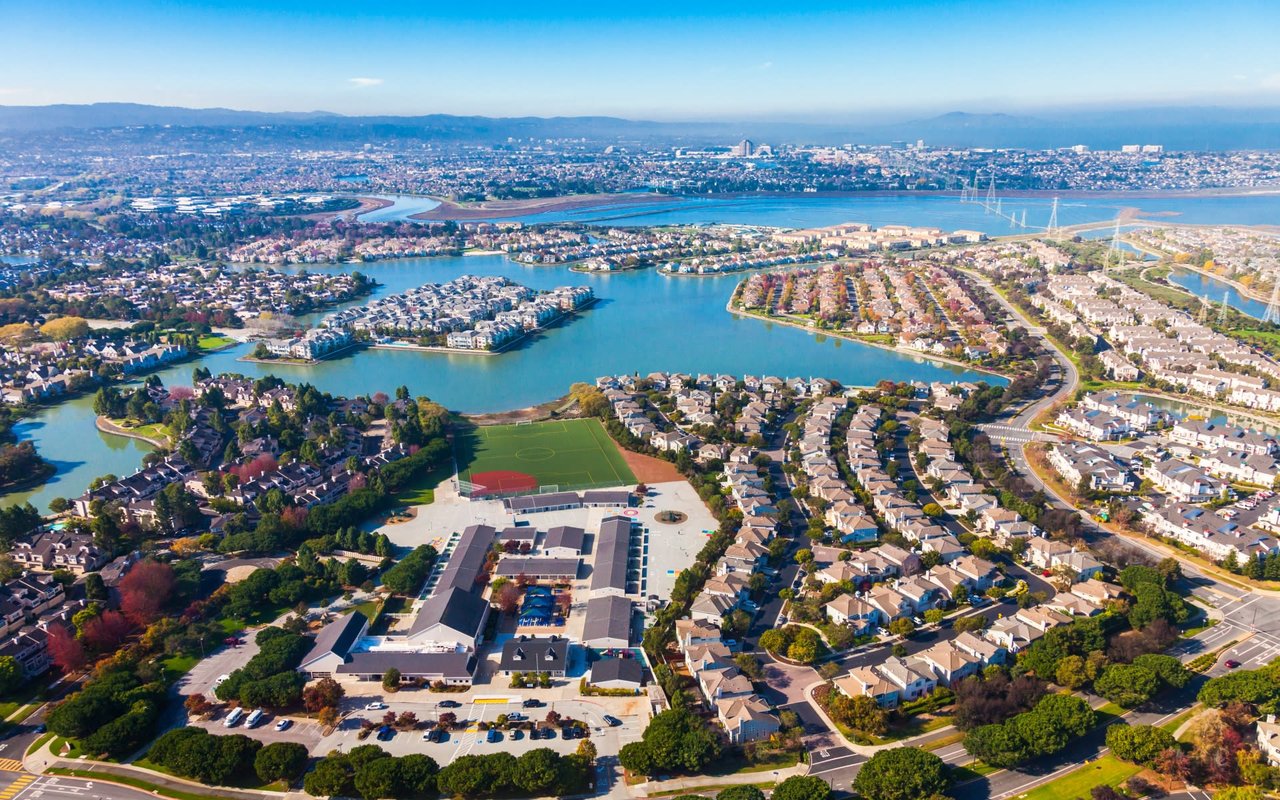
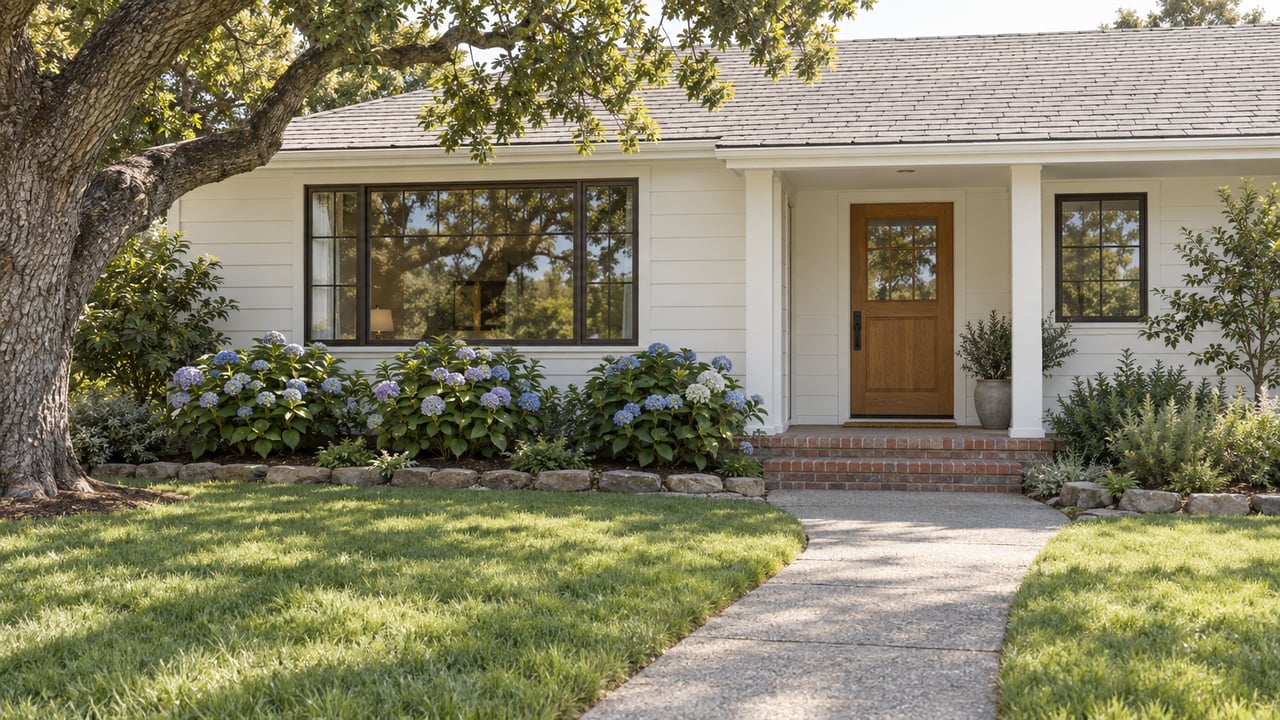
San Mateo Park reads differently from almost anywhere else on the Peninsula the moment you turn off El Camino Real. Streets platted in the early 1900s bend around close to seventy tree-planted traffic circles, originally laid out to route horse-drawn carriages without collisions at four-way corners. Landscape architect John McLaren, the same designer behind Golden Gate Park, oversaw the planting, and some of the specimen trees along those circles were transplanted from the grounds of San Francisco's 1915 world's fair. Architects working in the neighborhood during its first decades included Bernard Maybeck, Willis Polk, and Julia Morgan, and a fair number of their Arts and Crafts and Colonial Revival homes are still standing on half-acre and full-acre lots.
None of that is new information to anyone who has walked the neighborhood. What most owners have not tracked closely is the paper trail behind it.
On the List Since 1989, Never Acted On
San Mateo's original citywide historic building survey, completed in 1989, formally designated only two historic districts: Downtown, centered on South B Street and Third Avenue, and Glazenwood, a pocket of Spanish Colonial Revival homes from the early 1920s. Everywhere else in the city, including San Mateo Park, sat outside any local review process, even where a resource might later prove eligible for state or national listing.
Guidance from the state historic preservation office, tied to that same survey work, went further and grouped San Mateo Park with neighboring Baywood and Aragon as three west-of-El-Camino neighborhoods with enough age and architectural consistency to potentially qualify as historic districts. The finding sat there. San Mateo's preservation ordinance gave the city a review process for Downtown and nothing else. There was no application, no commission process, and no path for a neighborhood like San Mateo Park to become anything more than a name on a list.
What Ordinance No. 2026-06 Actually Changes
The city started rebuilding that process in June 2025, when the City Council directed staff to draft a historic preservation ordinance update built around California Register criteria and, critically, a requirement that owners themselves consent to any new district before it could be created. Community Development Director Zach Dahl and architectural historian Julianne Murphy of Rincon Consulting led the research and outreach that followed. A draft ordinance went out for public review in December 2025, the Planning Commission held a hearing and recommended adoption on April 14, 2026, and the City Council held its own public hearing on May 4, 2026, adopting the update as Ordinance No. 2026-06.
The mechanics matter more than the headline. A new historic district can now only move forward if the Historic Resources Commission first adopts a resolution assessing the proposal against the city's designation criteria, confirming that no more than a quarter of the buildings in the proposed district would count as non-contributing. Property owners inside the boundary get mailed notice at least ten days before that commission meeting, and again within thirty days of a final decision. Only after the commission's recommendation does the City Council hold its own public hearing and vote.
| Before Ordinance 2026-06 | After Ordinance 2026-06 | |
|---|---|---|
| Who can start the process | No defined path outside Downtown | Owners, through a defined application |
| Consent required | Not applicable, no process existed | Majority owner consent |
| Review body | None for residential districts | Historic Resources Commission, then City Council |
| Owner notice | None | Mailed notice before and after each decision |
For a neighborhood that has technically been a candidate since 1989, this is the first year a resident could actually start that conversation, and the first year a resident could actually stop one they didn't want.
The Tax Break Nobody Brings Up First
Most of the public conversation around the ordinance update has centered on what owners might lose: design review on exterior alterations, an added CEQA layer on larger remodels or demolitions within a designated district. Residents raised exactly those concerns at council meetings, along with questions about insurance costs.
Less discussed is the Mills Act, a state program that lets owners of qualifying historic properties enter a contract with the city for reduced property tax assessments in exchange for maintaining the historic character of the home. San Mateo already has properties under Mills Act contracts, and city staff confirmed as part of this same ordinance process that they will be following up directly with those owners. For a homeowner in a pre-1930s San Mateo Park house weighing a large restoration, that is a real financial lever that only becomes available through the same designation process most people assume is purely restrictive.
Why the Portals Can't Agree on What Your House Is Worth
None of this happens in a market with enough volume to average out. On May 25, 2026, one national listing site pulled its median list price for San Mateo Park from exactly one active listing on the market that day, a four-bedroom, three-bath home on Crescent Avenue asking $5,250,000. That single listing was the entire dataset behind that day's median.
Look at three other sources from the same general window and the picture gets stranger, not clearer. Redfin's monthly trend page showed a median sale price of $4.5 million in March 2026, up 1.9 percent year over year, with homes selling in 11 days versus 83 days the year before. A separate Redfin market summary for May 2026 showed a median sale price of $5,348,201 across all home types, up 34.1 percent year over year, a swing that has far more to do with which specific homes closed that month than with any broad shift in demand. Movoto's May 2026 figures moved the opposite direction entirely, showing a median asking price of $2.89 million, down 18 percent both month over month and year over year. Zillow, measuring something different again, an automated estimate of value across all homes rather than actual closed sales, put the average home value at $3,948,427, up 2.9 percent year over year.
Four sources, four different numbers, all technically accurate for what they measure, none of them wrong so much as measuring a market too thin to average. San Mateo Park typically sees single-digit sales in a given month. One estate sale on a half-acre lot, or one absence of a sale, moves the median more than it would in a neighborhood with real volume behind it.
What to Do Before You Pull a Permit or List
If you own in San Mateo Park and have a remodel, addition, or sale on the calendar in the next year or two, a few things are worth knowing before you start:
- Nothing has changed yet for your property specifically. No historic district exists here today, and none can be created without a formal application and majority owner consent under the new ordinance.
- A future push for designation, if it ever comes, would start with a Historic Resources Commission review, not a surprise city decision, and you would receive mailed notice before any hearing.
- If you are planning a major restoration on a pre-1930s home, ask your agent or a preservation consultant whether a Mills Act contract could offset the work through a lower tax assessment.
- Do not price a listing, or size a renovation budget, off a single portal's median. Ask for actual closed comparables from the last 90 days, pulled from MLS records rather than an aggregator's monthly snapshot.
A Few Direct Questions
Does the new ordinance mean my neighborhood is about to become a historic district? No. It means a process now exists if owners choose to pursue it. Nothing is automatic, and nothing moves forward without majority consent from property owners in the proposed boundary.
Can I still add an ADU or remodel my facade right now? Yes, under the same city zoning and permitting rules that apply today. Historic status only changes review requirements for properties formally designated or sitting inside an approved historic district, and San Mateo Park is neither today.
Why do the home value numbers I see online never match? Different sites measure different things, closed sales versus active listings versus automated estimates, over different time windows, in a neighborhood where a handful of sales in any given month can swing the number sharply either direction.
If you are weighing a renovation timeline, a Mills Act conversation, or simply trying to understand what your San Mateo Park home is actually worth in a market this thin, Carmen Miranda has spent decades reading Peninsula neighborhoods block by block rather than portal by portal. Let's Connect before you make a decision that assumes the wrong number.