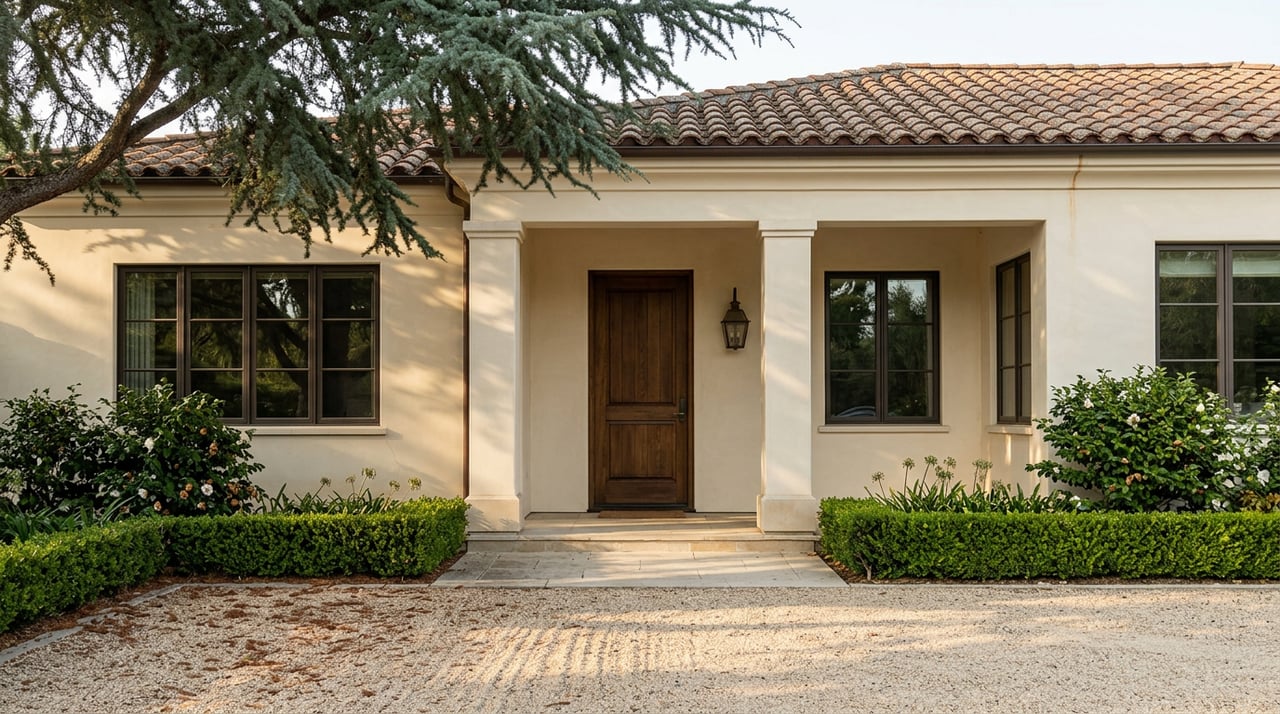
On August 6, an estate at 3000 Ralston Avenue closed for $70 million. The sellers had built the Italian-villa-inspired compound over six years with more than a hundred subcontractors. The buyer's identity was not disclosed by listing agent Jenn Gilson, though reporting has since pointed to a young executive from the AI industry. The price doubled Hillsborough's previous residential record, an estate Elon Musk sold in 2021 for $30 million that traded again a year later for $35 million.
That is a remarkable transaction. It is also, if you are trying to understand Hillsborough as a place to buy or sell, close to useless as a data point. And that gap between how dramatic a sale looks and how little it tells you about the broader market is the thing worth understanding before you compare Hillsborough to any other Mid-Peninsula town.
A Median Built From a Handful of Sales
Here is the number that should give any buyer pause. In the three months ending May 2026, one source reported Hillsborough's median sale price at $7.1 million, up 33.4 percent from the same period a year earlier. Over roughly the same window, a different index put the typical home value at just over $5 million, down 4.7 percent year over year. A third source, drawing from its own listing and sold data, showed a $7.2 million median list price and an $8.0 million median sold price in May. A fourth put the February 2026 median at $6.0 million.
Four sources, one town, one season, and a spread of roughly three million dollars.
That spread is not a data quality problem. It is what happens when a market has almost no volume. Hillsborough recorded 39 sales in May 2026 according to one platform's count, which sounds like a real sample until you remember it covers an entire town for an entire month. When your dataset is a few dozen closings, one $70 million estate, or one distressed sale on the other end, drags the median wherever it wants to go. Days on market told the same story: one source reported homes selling in 11 to 12 days, another showed a range stretching past a month, both technically describing the same market in the same season.
According to the San Francisco Standard, Gilson called the Ralston sale "a steppingstone into the ultra luxury market for Hillsborough." That is a fair read of one transaction. It is not a read of the market underneath it.
Why the Portals Disagree With Each Other
The disagreement traces back to what each number is actually measuring. A median sale price is the literal midpoint of whatever happened to close in a given window. It has no memory of what a typical Hillsborough home looked like last year or the year before. A modeled "typical value" index tries to smooth that volatility by estimating value across the entire housing stock, not just the homes that sold. Neither approach is wrong. But in a market with this few transactions, they can point in opposite directions in the same month, one showing prices up a third, the other showing them down.
For a buyer used to more liquid markets like Burlingame or San Mateo, this takes some recalibration. In those towns, monthly sales counts are large enough that the median is a reasonably stable signal. In Hillsborough, the median is closer to a snapshot of whoever happened to be selling, and buying, in that particular window.
Land Use and Housing Growth
The reason Hillsborough's sales volume stays this thin is not incidental. It is written into the town's land use rules.
State housing law still requires the town to plan for growth. According to the Town of Hillsborough, Hillsborough must accommodate 554 net new housing units under the current Regional Housing Needs Allocation cycle, which runs from 2023 to 2031. The town's adopted plan meets nearly all of that obligation through accessory dwelling units and development on town-owned sites, and it does not require rezoning any private property.
What Actually Gets Bought and Sold Here
If the median is not a reliable anchor, what is? Look at how differently two parts of the same town have behaved recently. Hillsborough Hills posted a median sale price near $5.2 million as of January 2026, down about 21 percent from a year earlier. Hillsborough Heights, over the three months ending April 2026, posted a median near $10.9 million, up nearly 68 percent year over year.
| Sub-area | Recent median | Year-over-year change |
|---|---|---|
| Hillsborough Hills | ~$5.2M (Jan 2026) | down ~21% |
| Hillsborough Heights | ~$10.9M (3 mo. ending Apr 2026) | up ~68% |
Those are not two different markets responding to different economic conditions. They are the same phenomenon at a smaller scale, a handful of sales in each pocket moving the number wherever the specific homes that closed happen to point it. The lesson generalizes: in Hillsborough, sub-area medians tell you even less than the town-wide figure, because the sample sizes shrink further still.
What tends to matter more than any of these medians is the same thing that shaped the Ralston Avenue sale itself. The listing price for that estate fell from an initial $88 million to $70 million before it closed, a discount of roughly 20 percent, and reporting on the deal noted that the buyer's core motivation was the 12 acres, not the square footage. Design review adds another layer specific to this town.
For Buyers Comparing Hillsborough to Other Peninsula Towns
If you are cross-shopping Hillsborough against Burlingame, Belmont, or Hillsdale using median price as your yardstick, you are comparing a stable, high-volume number in one column to an unstable, low-volume one in the other. That is not really a comparison. A more useful approach treats Hillsborough as a market defined by scarcity of specific things, usable acreage, privacy, and design-review-approved architecture, rather than by a moving price line that a single trophy sale can bend.
A Few Questions Worth Asking Before You Compare Numbers
Does one $70 million sale really move Hillsborough's citywide median? In a town with roughly three to four dozen sales a month, a single transaction at that scale can visibly shift the reported median for the period it closes in, even though it says nothing about the value of a typical Hillsborough home.
Why doesn't the town simply approve more large lots to ease scarcity? The current housing plan adds units through ADUs and town-owned sites rather than by rezoning private, estate-scale parcels.
Is Hillsborough's market heating up or cooling down right now? Depends which index you ask. A raw median sale price showed a sharp year-over-year increase this spring, while a modeled typical-value index showed a modest decline over the same period. Both are accurate measurements of different things, which is exactly why neither should be read as the final word on its own.
Understanding a market this thin takes more than a portal screenshot. If you are weighing Hillsborough against another Peninsula community, or trying to make sense of what a specific sale actually implies for your own timeline, Carmen Miranda has spent decades reading these numbers in context. Let's Connect.
This article is general information, not legal, tax or financial advice. Consult a qualified professional about your situation.